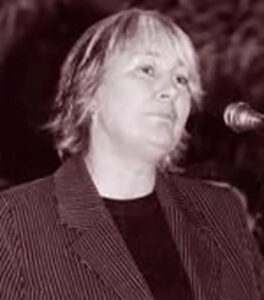
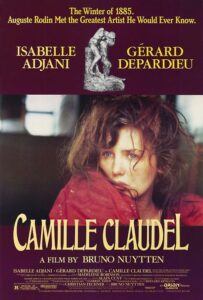
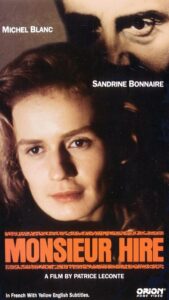
During her fifty-year career, Joëlle Hache has amassed editing credits for sixty-six films. She began working in 1978 as an assistant to editor Noëlle Boisson on the first two Les Bronzés films directed by Patrice Leconte. In 1983 she became Leconte’s primary editor and worked with him on eighteen films, beginning with Circulez y a rien à voir!. She also influenced the music choices for some of his films, such as Le Parfum d’Yvonne, Monsieur Hire, and Une Promesse. Leconte has said that he considers her “his right-hand woman.” Hache is also known for working with other directors on such films as Camille Claudel (Bruno Nuytten), L’homme fidèle (Louis Garrel), La Melodie (Rachid Hami), Un Jour Fille (Jean-Claude Monod) and in 2025—at the age of 75—she edited Belladone, directed by Alante Kavaite.
Hache has received five nominations for a César award for Best Editing, and in 2016 she became an officer in the Order of Arts and Letters, managed by the French Ministry of Culture, which rewards “people who have distinguished themselves by their creation in the artistic or literary field or by the contribution they have made to the influence of arts and letters in France and in the world.”
About Monsieur Hire, Max Foyzey wrote that “The editing choices by Leconte and editor Joëlle Hache are spectacular, taking us directly to the middle of happenstances, effectively creating an immediacy that moves the the story along in a brisk eighty minutes.”
DECUGIS, CÉCILE
Cécile Decugis
1934 – 2017
After making two short films, Cécile Decugis became the assistant editor to Marie-Josèphe Yoyotte on Truffaut’s The 400 Blows. She then edited Godard’s Breathless and Truffaut’s Shoot the Piano Player (co-edited with Claudine Bouché), putting her in the same company as Agnès Guillemot, who also edited films for both directors. In 1960 she was arrested for renting an apartment to National Liberation Front militants* and spent two years in La Roquette prison. Decugis became the main editor for Éric Rohmer in 1969 and from then until 1983 she edited nine of his films, including My Night at Maud’s, Claire’s Knee (co-edited by Christine Lecouvette), Chloe in the Afternoon and Pauline at the Beach. She mentored Mary Stephen, who edited later Rohmer films. Decugis has thirty editing credits. In 2011, at age 77, she reworked a 1957 documentary film about Algerian refugees in Tunisia and rereleased it as Bread Distribution.
*The NLF supported the Algerian war of independence from France.
NOTE: In 1993, Claude Ventura made Chambre 12 Hôtel de Suède, a film about the making of Breathless, in which he interviewed Decugis (It’s rare to find her on camera.) Massoumeh Lahidji was kind enough to translate that interview; you can watch the film and also read the translation in her entry in the Appendix.
“Truffaut rarely came into the cutting room because he did not like it very much, whereas you could not imagine a film of Godard’s being edited without him being present. Rohmer was there all the time because he did not like you to work a scene or even a shot without him being present…
When we went to the first screening [of Shoot the Piano Player], Truffaut was very happy. It did not change because there were not many ways to cut it. I hate the term “first cut” because you should always be cutting to make it work. I do not think you should be doing bad cutting. After this “first cut” of course you will make some modifications. In New Wave films the cutting style was not planned in advance. They had a concept of what the style would be and they worked from a script, but they did not know in advance exactly where the cuts would be made. They would have been against being so pre-planned. This is not to say that we were going into the cutting room to find and create something new. The concept of editing was part of the whole film like the style of the shoot and the acting. The editing does not exist in isolation. Sometimes in the cutting room you discover an innovation or you put right problems with the cut. However, in general what happens in the cutting room is a reflection of the film.”
Credit page for My Night at Maud’s
“They [Truffaut and Godard] were against conformity in French cinema. What we cut had to be as alive as possible, appearing spontaneous rather than worked out. Although often, that which appears most natural can require the most reflection. Truffaut was not so much interested in editing, rather he was interested in the idea of the film in general. He would return from a screening and say, “That particular scene is too long, you need to shorten it.” He was fantastic with the overview of the film, but he got bored working with the detail. Godard on the other hand was incredible with cutting. For him cinema defined itself by editing, for Godard cinema is editing.” —Two excerpts from an interview with Decugis in “Editing and Post-Production Screencraft” by Declan McGrath. The full interview can be found in the Appendix.

 After making two short films, Cécile Decugis became the assistant editor to Marie-Josèphe Yoyotte on Truffaut’s The 400 Blows. She then edited Godard’s Breathless and Truffaut’s Shoot the Piano Player (co-edited with Claudine Bouché), putting her in the same company as Agnès Guillemot, who also edited films for both directors. In 1960 she was arrested for renting an apartment to National Liberation Front militants* and spent two years in La Roquette prison. Decugis became the main editor for Éric Rohmer in 1969 and from then until 1983 she edited nine of his films, including My Night at Maud’s, Claire’s Knee (co-edited by Christine Lecouvette), Chloe in the Afternoon and Pauline at the Beach. She mentored Mary Stephen, who edited later Rohmer films. Decugis has thirty editing credits. In 2011, at age 77, she reworked a 1957 documentary film about Algerian refugees in Tunisia and rereleased it as Bread Distribution.


