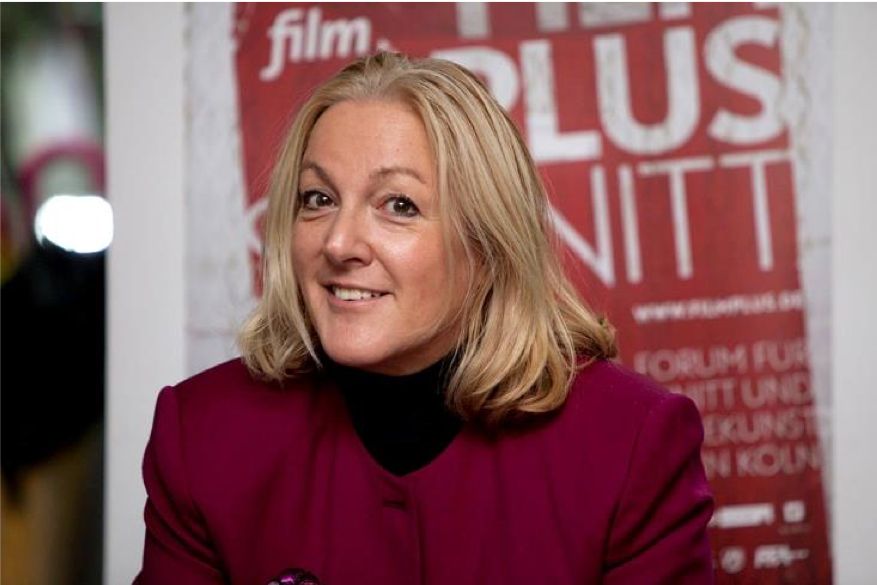
Patricia Rommel
Born 1956

Patricia Rommel has earned over sixty-five editing credits since she began her career in 1982. She was an early collaborator of director Uwe Janson (Verfolgte Wege, Herz in der Hand) before editing Caroline Link’s Beyond Silence. Rommel and Link have become frequent collaborators and have worked together on Nowhere in Africa, Annaluise & Anton, and A Year Ago in Winter. Rommel has also edited several films for Florian Henckel von Donnersmarck (The Lives of Others, The Tourist, Never Look Away), and Angelina Jolie (In the Land of Blood and Honey, By the Sea and First They Killed My Father). Rommel’s editing has earned numerous honors and awards. She received Lola nominations for The Lives of Others and A Year Ago in Winter, won German Film Critics Association awards for The Lives of Others and Hendrik Hölzemann’s Off Beat, and earned two German Camera nominations (winning for Off Beat) as well as two Film Plus nominations (winning again for Off Beat).

“Editing is quite similar to writing. A writer has his thoughts and his words. As an editor I work with the shots, the sound, the music and my thoughts. I string takes together, play around with the space of time or displace the intended order of the shots and the meaning will be completely different. There are endless possibilities of how a story can be told. When things become challenging my ambition is fueled because, all the more so, I have to use my creativity and think out of the box.”
—“Filmmaker Interview: Editor Patricia Rommel Speaks to Fashion Designer Paula Immich” by Paula Immich. The full text can be found in the Appendix.


Bettina Böhler
Born 1960
 At age 18, Bettina Böhler began working as an assistant in a dubbing studio, preferring “learning by doing” in the editing room because little formal filmmaking education was available in West Germany. Her first theatrical feature was You Love Me Too (co-directed by Helmut Berger, Anje Franky, & Dani Levy). She has eighty-five editing credits, including eleven films for Christian Petzold, including The State I Am In, Wolfsburg, Yella, Jerichow, Barbara, Phoenix, and Transit. She has also edited films for other German directors such as Margarethe von Trotta (Hannah Arendt, Die abhandene Welt), Michael Klier (The Grass Is Greener Everywhere Else and Ostkreuz), Marcel Gilser (Fögi Is a Bastard and A Man, His Lover, and His Mother), Angela Schanelec (Places in Cities and Marseille), Angelina Maccarone (Unveiled/Fremde Haut, Hounded and Vivere), and the eight-hour documentary Taiga by Ulrike Ottinger. Böhler has received two Lola nominations (Barbara, Nicolette Krebitz’s Wild), four German Film Critics Association nominations (winning twice, for The State I Am In and Barbara), three Film Plus nominations (for Wolfsburg, Unveiled, Yella), and one German Camera nomination (for Nicolai Rhode’s Zwischen Nacht und Tag). In 2007, she received the Bremen Film Award for her contributions to European cinema.

[In referring to Böhler…] “For her, to edit a film means getting into the groove of the visual rhythm, guiding the flow of images, and harmonizing the interplay of image and sound. Petzold’s precisely crafted films demonstrate both how she allows scenes to reverberate and fade out as well as how she synchronizes the momentum of one sequence with the next. She is the metronome—and attentive, sensitive, full of empathy with the characters.”
—“Die Taktgeberin: Die große Unsichtbare des deutschen Kinos: Bettina Böhler montiert Filme, zum Beispiel Barbara von Christian Petzold. Ein Werkstattgespräch” by Christiane Peitz. The full text can be found in the Appendix.


 .

Juliane Lorenz
Born 1957
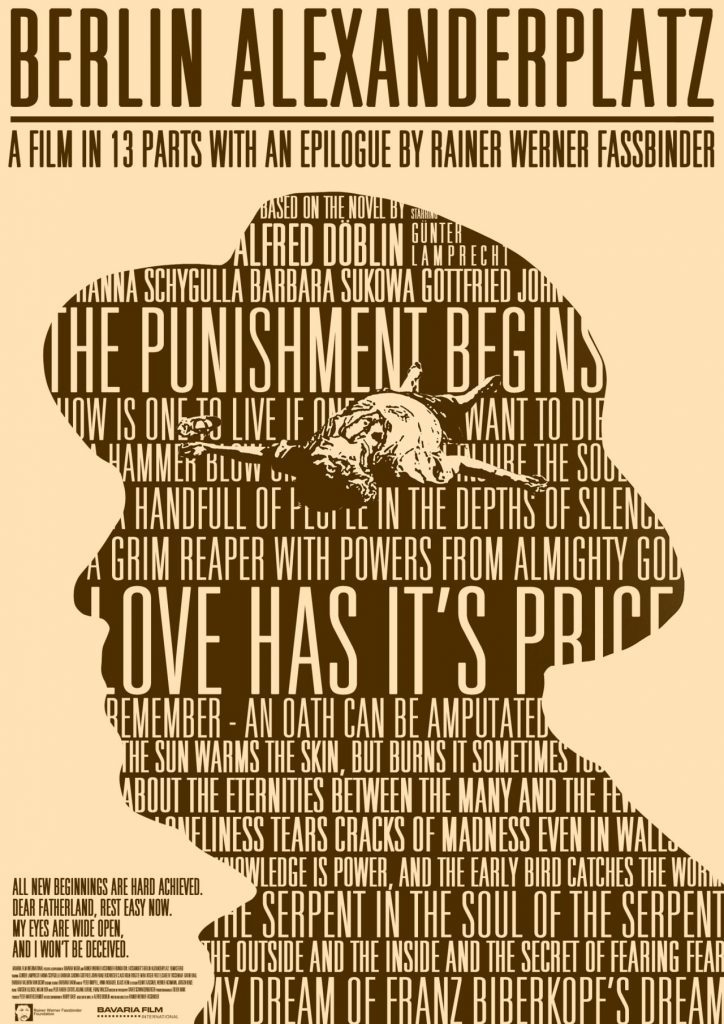
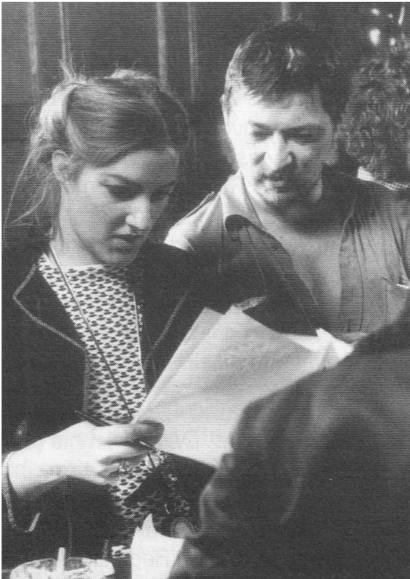 Juliane Lorenz was nineteen when she was hired to assist Ila von Hasperg (*) on Rainer Werner Fassbinder’s Chinese Roulette. Beginning with Despair, she edited most of Fassbinder’s films thereafter, including Berlin Alexanderplatz, The Marriage of Maria Braun, Veronica Voss and Querelle, which she finished after his death. When she was twenty-four, she found him dead in their apartment (they were married). Lorenz then became the editor for Werner Schroeter (Malina, The Rose King), and since 1992, she has been head of The Fassbinder Foundation, producing and directing a feature documentary on him along with other projects.
(*) Ila von Hasperg, it should be noted, also edited Fassbinder’s The Stationmaster’s Wife as well as Werner Schroeter’s The Death of Maria Malibran, Ulrike Ottinger’s Ticket of No Return, and Bette Gordon’s Variety, along with many other films.
“Rainer loved editors. He felt himself to be an editor. He used to say: ‘I do my job on the set and you do yours in the editing room. You are a second director. You have to finish the film, it’s
your responsibility.’ He inflamed me with that idea and that’s how I grew up.”
—Juliane Lorenz interviewed by Roger Crittenden in “Fine Cuts: The Art of European Film Editing.” The full interview can be found in the Appendix.