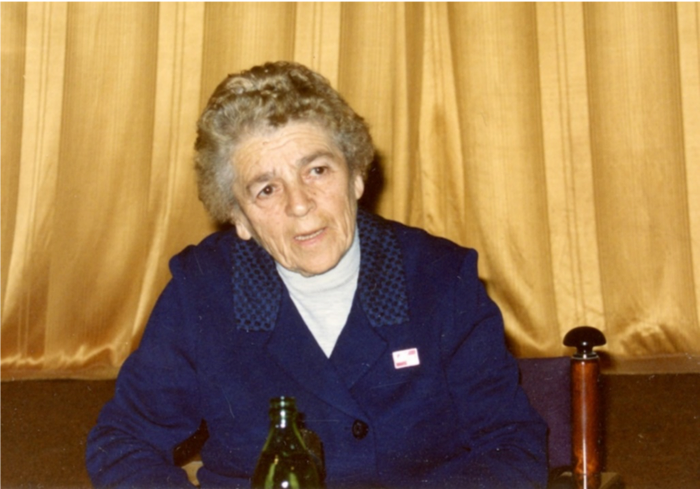
Esfir Tobak
1908 – 2004
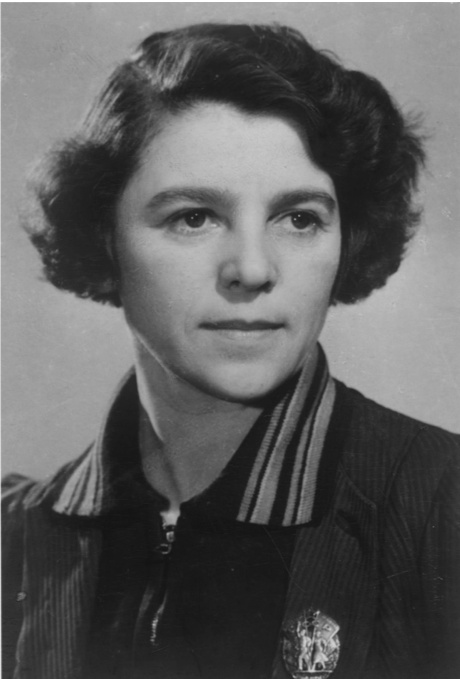
Esfir (a.k.a. Esther) Tobak, with sixteen film credits, began working in 1924 at age sixteen when she was given a job editing negatives at the Odessa film studio (straight out of the orphanage-school where she had been since her father died in 1917). She was never without work after that until she retired—fifty-eight years later—in 1982.
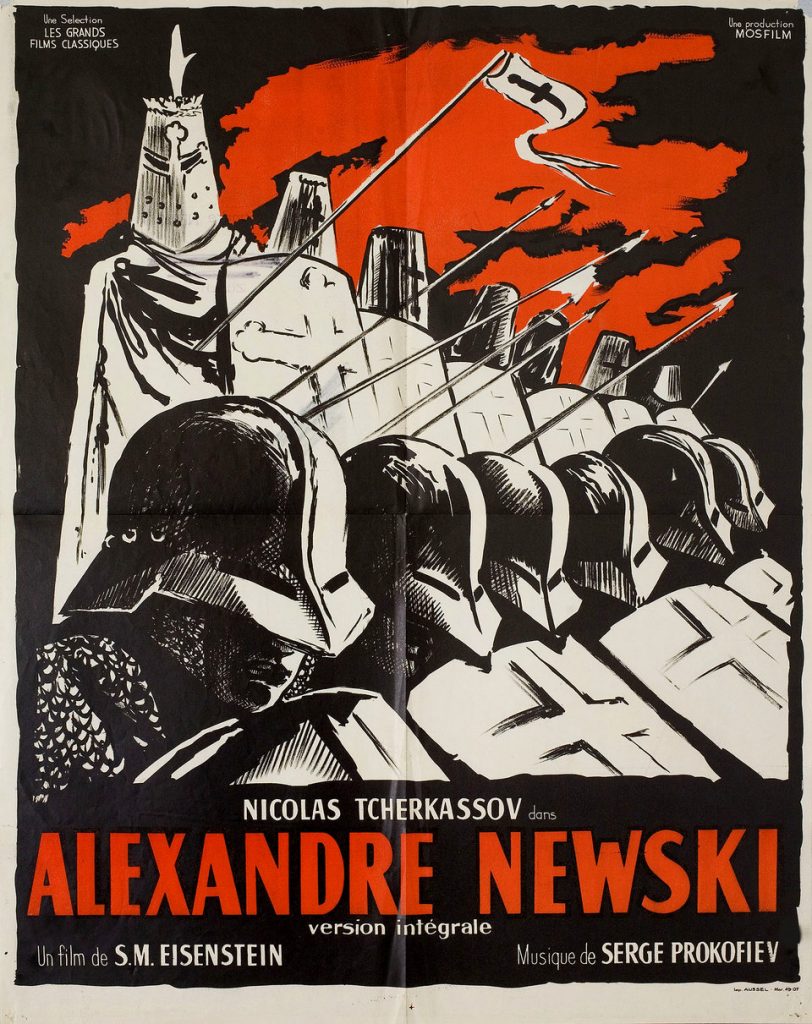
Early on, Tobak worked on Dovzhenko’s Earth in Kiev. After moving to Moscow in 1930, she immediately got a job at the Moscow film studio, editing negatives and soon began working on one of the first sound films, Men and Jobs, directed by Aleksandr Macheret. In her work with Sergei Eisenstein and Grigoriy Aleksandrov, she was the editor of Alexander Nevsky, Ivan the Terrible Part I and Part II, and Bezhin Meadow. She was also the editor of Aleksandrov’s Moscow Laughs, and in 1979, she and Aleksandrov co-edited Que Viva Mexico.
Tobak edited for numerous other Russian directors such as Mikhail Romm, Iskra Babich, Samson Samsonov (The Grasshopper, Behind Show Windows), Aleksandr Mitta (Bez strakha i upryoka) and Fyodor Filippov and Valentin Kadochnikov (Volshebnoye zerno).
(As for other Russian women editors, it’s worth nothing that multiple films were edited for Samsonov by Zoya Veryovkina, Aleksandra Kamagorova, Klavdiya Aleyeva, L. Lysenkova and Ida Dorofeyeva.
Working for Romm, Valentina Kulagina edited one film, Tatyana Likhachyova edited two and Yeva Ladyzhenskaya edited seven.)
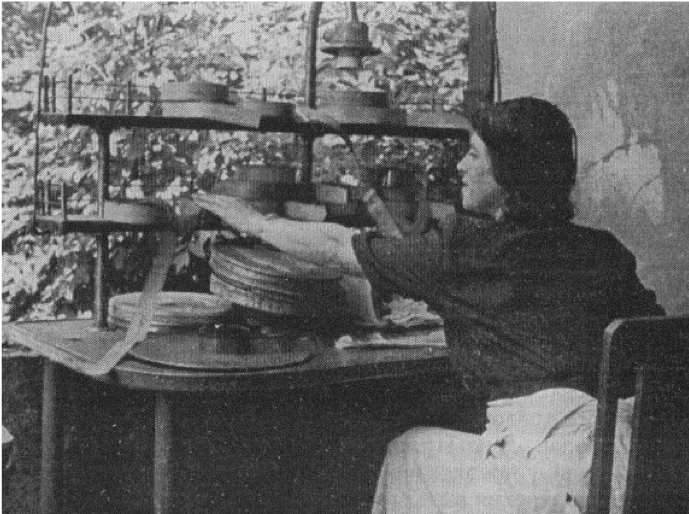
“In the editing studio we had a Moviola, which only enlarged frames 2-3 times. This is very little. I would thread the film and soundtrack, turn it on, stop at the right place, and make a mark on the film with a special pencil. Eisenstein would come up behind me, lean over the back of the chair to see the lens through my eyes. Usually he agreed with my mark. Sometimes he asked me to add or remove a shot without specifying, as other directors did, exactly how many frames. An experienced editor, with a good sense of rhythm, knows. Attaching strips of film took a long time. The footage was cut with scissors and glued with acetone. Unfortunately, new splicing methods came to Mosfilm only in 1955. And flat-bed editing tables with large screens, only in the 1960s.
In the difficult years of the war, we worked in the editing studio in fur coats and fingerless gloves. On our feet we wore huge felt boots from the prop department. Vapor came out of our mouths. Those are the conditions in which we edited Ivan the Terrible.”
—“A Woman Named Star” by Elena Konstantinova. The full text (in Russian) can be found in the appendix.