Cut to:
Her Mentor Edited Breathless
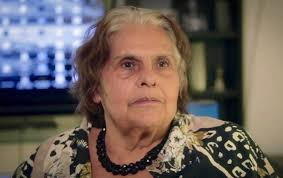
Edited from a memorial post written by Mary Stephen a month after the passing of Cécile Decugis in June 2017:
 Rohmer suggested I become an assistant editor on La Femme de l’Aviateur (so I could earn a little dough and stay in France)…When I knew that Cécile had edited A Bout de Souffle (Breathless), which is such a mythical work for cinephiles all over the world, I told Éric I would have been happy to sweep the floors for Cécile.
Cécile always maintained great gentleness with me, despite Éric’s strong remonstrations: “She’s making the other crew all cry, aren’t you scared of her?”
 Then followed years of friendship, much of it at a distance. She never made me cry; on the contrary she helped me get over youthful tears whenever there was a matter of heartbreak or slight at perceived injustices to me, as a young Chinese woman fresh from Canada.
When I went to visit her for the last time, the year before she died, she brought me into the house, she gave me a DVD of her film about the demolition of the Renault plant on the island of Seguin. Earlier she had asked me for my opinion about her new film about her father, a short but emotional piece. I was very moved by this film that she was going to such great pains to finish, with the editing formats, the sound mixing…It was incredible for me and my children to see this woman at 86 or 87 keeping the faith as a filmmaker, and being able to carry on with her work almost to the end. I would have liked to be able to say a last farewell.
Never postpone until tomorrow a telephone call you could make today….

Mary Stephen
No birth date available.
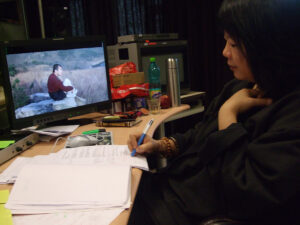
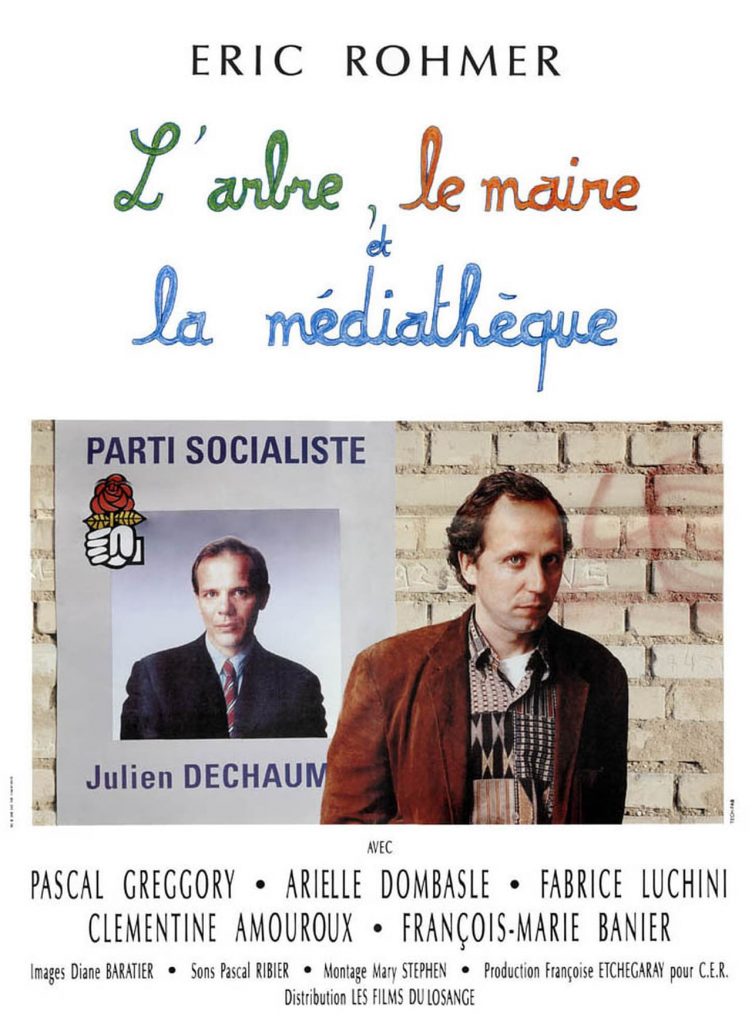
Mary Stephen is a Hong Kong-born Chinese editor and filmmaker with fifty-two credits and four best editing nominations. She was Éric Rohmer’s assistant editor (working under Cecile Decugis) and then his regular editor and collaborator from 1992-2010. She edited ten of his films, including A Tale of Winter, The Lady and the Duke, until his last film, The Romance of Astrea and Celadon. Stephen has also edited numerous mainland Chinese and Hong Kong narratives and documentaries, including Li Yang’s Blind Mountain, Fan Lixin’s Last Train Home, Freddie Wong’s The Drunkard, Jessey Tsang’s Flowing Stories, Ann Hui’s Our Time Will Come and Amos Why’s Dot 2 Dot.
Stephen is also a filmmaker whose works include Vision from the Edge: Breyten Breytenbach Painting the Lines, Ombres de soie, and The Memory of Water or Jeanne Moreau and Steamed Fish.
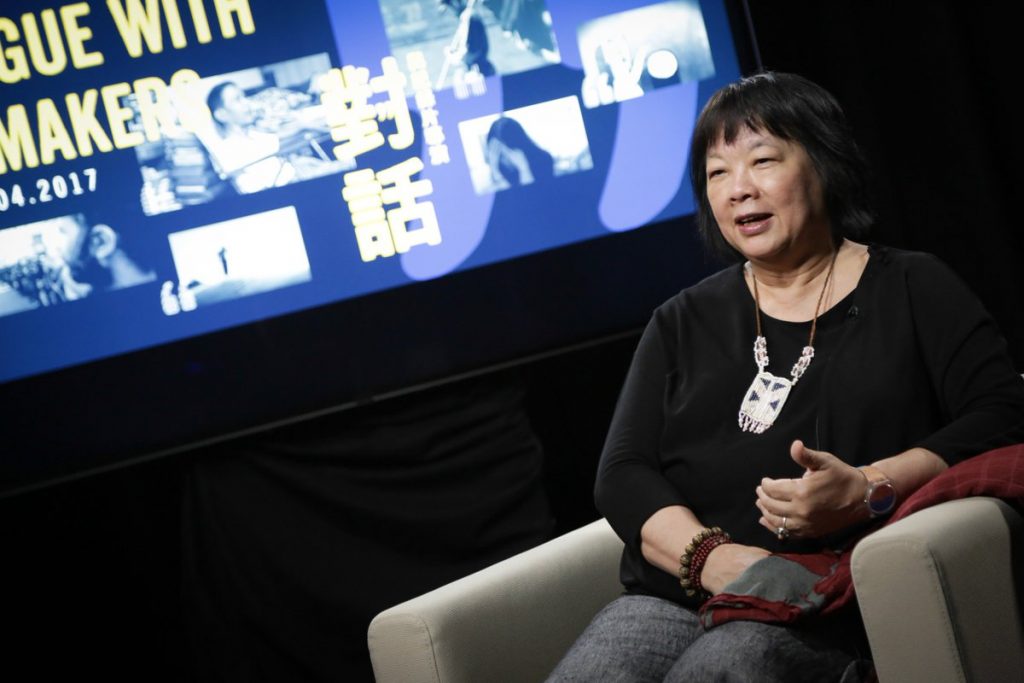
“Rohmer is very precise in his “constructions”. He quite often knew already what the final film should “feel” like before we cut it. He loves to use shot-countershot, therefore the “listener” becomes an active participant as well in the conversation. We always look for “interesting reactions” on the listener’s face. When he shoots a scene in shot-countershot, he shoots the scene (or fractions of it) entirely on one character at a time regardless of whether he/she is the one talking or not. I am also particularly fond of “reactions” and I think that characters reveal themselves more through their silences than what they say (which is of course a favourite theme of Rohmer’s: how people’s words often mask their true feelings). In Autumn Tale, I went much further than the previous films in looking for the listener’s reactions. Alain Libolt, who plays Gerald, is particularly wonderful when he is listening.”
—“Interview with Mary Stephen” by Bill Mousoulis. The full interview can be found in the Appendix.



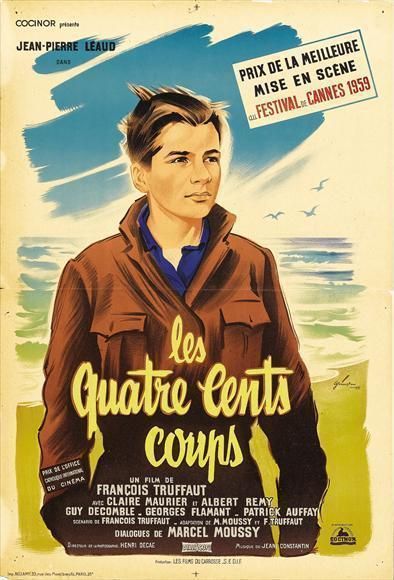
 After making two short films, Cécile Decugis became the assistant editor to Marie-Josèphe Yoyotte on Truffaut’s The 400 Blows. She then edited Godard’s Breathless and Truffaut’s Shoot the Piano Player (co-edited with Claudine Bouché), putting her in the same company as Agnès Guillemot, who also edited films for both directors. In 1960 she was arrested for renting an apartment to National Liberation Front militants* and spent two years in La Roquette prison. Decugis became the main editor for Éric Rohmer in 1969 and from then until 1983 she edited nine of his films, including My Night at Maud’s, Claire’s Knee (co-edited by Christine Lecouvette), Chloe in the Afternoon and Pauline at the Beach. She mentored Mary Stephen, who edited later Rohmer films. Decugis has thirty editing credits. In 2011, at age 77, she reworked a 1957 documentary film about Algerian refugees in Tunisia and rereleased it as Bread Distribution.


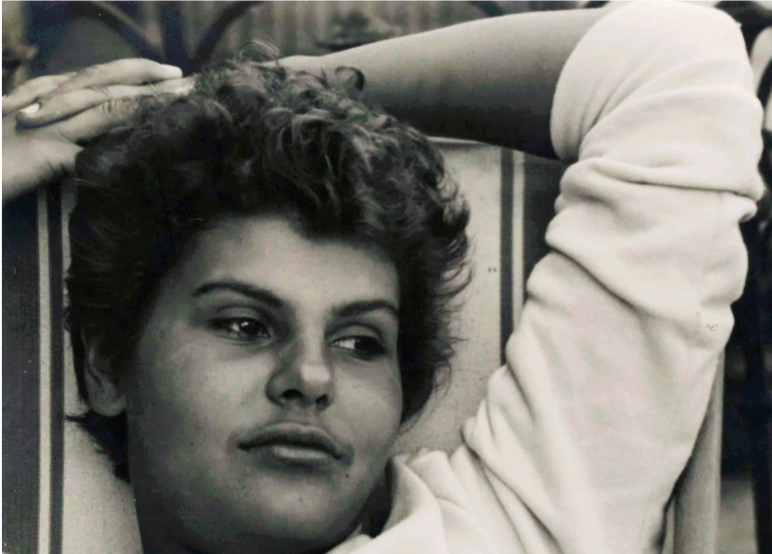 Marie-Josèphe Yoyotte’s father was from Martinique, her mother was French. She was born and raised in France, and worked primarily in that country, but maintained a close relationship with her roots in Martinique.