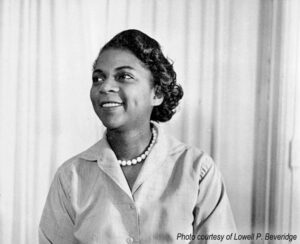
In 1947, Hortense “Tee” Beveridge was admitted to Hunter College. She majored in social work and became a mentee of the CNA (Committee for the Negro in the ARTS) which was the beginning of her film education. She then attended two semesters of night school film classes at New York University and made the acquaintance of fellow female film editor Peggy Lawson (with whom she would go on to collaborate over many years).
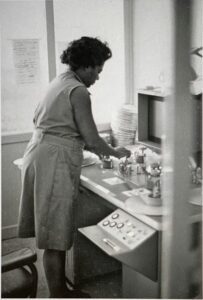
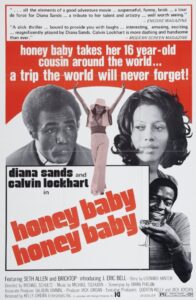
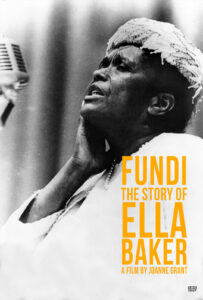
Beveridge’s political activism in the late 1940s led her to join the Council on African Affairs (CAA)—an outgrowth of the International Committee on African Affairs, cofounded in 1937 by Max Yergan and Paul Robeson—where she merged her political activities with her nascent filmmaking skills. The CAA provided Beveridge with the opportunity to edit her first known complete film, South Africa Uncensored (1951), a twenty-two-minute polemic against apartheid that was distributed by the Council. She was first black woman admitted to Local 771, the union for motion picture film editors, during the mid-1950s. During the next thirty years, Beveridge worked in three areas of film production (sometimes being credited with her maiden name, Hortense Sie). She cut featurette “making-of” documentaries about commercial films like Bullitt (1968), Mean Streets (1973), and The Outlaw Josey Wales (1976); she edited feature narrative films, including Honeybaby, Honeybaby (1974) by Michael Schultz; and edited documentaries like Amiri Baraka’s The New-Ark (1968), Joanne Grant’s Fundi: The Story of Ella Baker (1981), about the great civil rights activist, and Bittersweet Survival: Southeast Asian Refugees in America (1982) by Christine Choy and J. T. Takagi.
Beveridge also mentored St. Clair Bourne, Kathleen Collins, and John Killens at various early stages of their careers. – Thanks to Mike Jones and Walter Forsberg for their research.
Editing “Honeybaby, Honeybaby” in Beirut (circa 1974). Courtesy of Lowell P. Beveridge
As Walter Hess recalls: “I was part of that leftist group. MPO Television Films employed a great number of what you would call leftists, as did several other companies that did similar work. Hortense and I were companions, working next to each other in the cutting room. There was only one other African American editor that I can think of at that time. They were incredibly rare. Tee had a very fine reputation as an editor, especially among that group of leftists. As far as I was concerned, Tee was very reserved. She was not ‘Hail fellow, well met.’ She was her own person, and I think the fact that she was black and a woman made her careful about what she might say or do.”
Please note: There are links to several of her films in the Appendix, courtesy of Ina Archer and the archive at the Smithsonian’s National Museum of African American History & Culture.
HACHE, JOËLLE
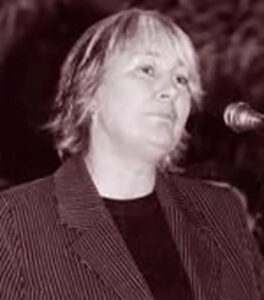
Joëlle Hache
Born 1950
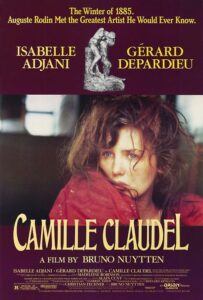
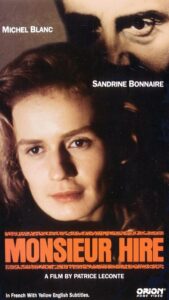
During her fifty-year career, Joëlle Hache has amassed editing credits for sixty-six films. She began working in 1978 as an assistant to editor Noëlle Boisson on the first two Les Bronzés films directed by Patrice Leconte. In 1983 she became Leconte’s primary editor and worked with him on eighteen films, beginning with Circulez y a rien à voir!. She also influenced the music choices for some of his films, such as Le Parfum d’Yvonne, Monsieur Hire, and Une Promesse. Leconte has said that he considers her “his right-hand woman.” Hache is also known for working with other directors on such films as Camille Claudel (Bruno Nuytten), L’homme fidèle (Louis Garrel), La Melodie (Rachid Hami), Un Jour Fille (Jean-Claude Monod) and in 2025—at the age of 75—she edited Belladone, directed by Alante Kavaite.
Hache has received five nominations for a César award for Best Editing, and in 2016 she became an officer in the Order of Arts and Letters, managed by the French Ministry of Culture, which rewards “people who have distinguished themselves by their creation in the artistic or literary field or by the contribution they have made to the influence of arts and letters in France and in the world.”
About Monsieur Hire, Max Foyzey wrote that “The editing choices by Leconte and editor Joëlle Hache are spectacular, taking us directly to the middle of happenstances, effectively creating an immediacy that moves the the story along in a brisk eighty minutes.”
POSTER GALLERY
“Breathless” edited by Cecile Decugis
“Wild” (2016) — Directed by Nicolette Krebitz — Edited by Bettina Böhler
LOUISIANA STORY, 1948
It’s Up to You
Last Night We Attacked: A Photographic Record of Fighting Resistance in Palestine
SIDI, ENAT
Enat Sidi
No birth date available.
As a documentary film editor, Enat Sidi is a frequent collaborator with directors Heidi Ewing and Rachel Grady, editing most of their feature films including The Boys of Baraka (an Emmy nominee), Jesus Camp (an Oscar nominee), 12th & Delaware (a Peabody winner), and DETROPIA (Sundance Best Editing award). Sidi has also edited for Ellen Kuras and Jennifer Vendiiti, and she edited The Wolfpack, the 2015 Grand Jury Winner at Sundance.
FEIGINOVA, LYUDMILA
Lyudmila Feiginova
Dates unknown; deceased.
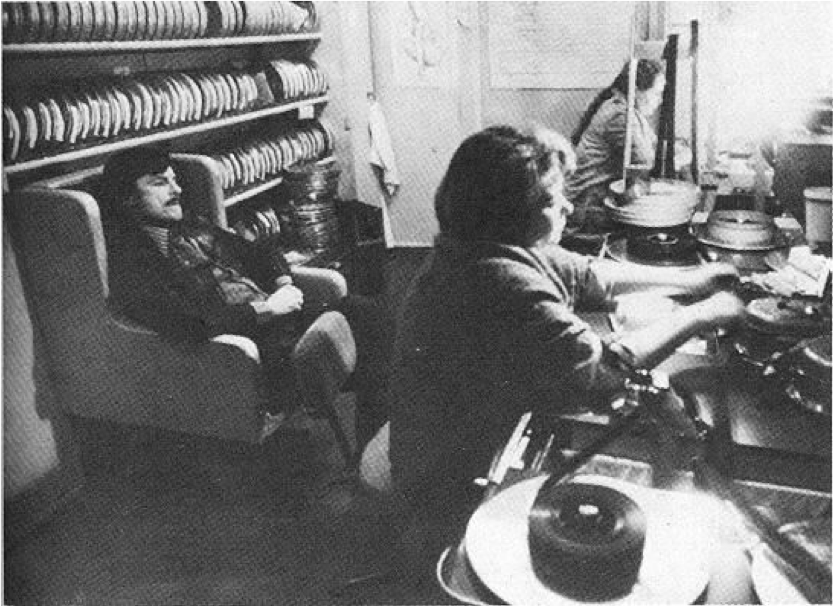
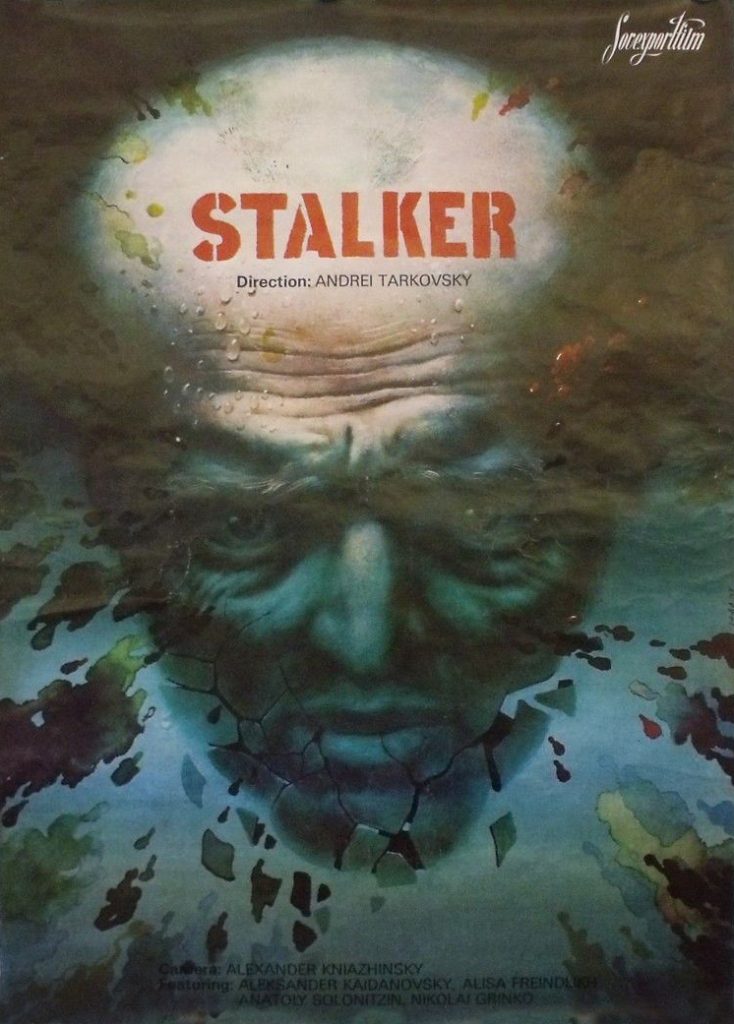
Lyudmila Feiginova (also sometimes credited as Feyginova) started working as an editor in 1959. She edited most of Andrei Tarkovsky’s films, including Stalker, The Mirror, Solaris, and Andrei Rublev, and numerous other films by other directors. She was also assistant editor, though uncredited, on Dersu Uzala, Akira Kurosawa’s film set in Russia.
“Feiginova was a highly professional — and very interesting — person. While working on the films of Tarkovski she would often suggest significant changes during the editing of the film. For example, in Mirror, Feiginova was the one who proposed that the scene with the stutterer should open the film. That scene was based on a memory Andrei had from the house of his mother; it was something he had watched on TV. The scene was originally intended for the middle of the film, but Feiginova suggested that it should be the opening scene of Mirror — and Andrei agreed.
Another scene which Feignova rearranged was that of the monologue of Stalker’s wife. This scene takes place in the bar, and its intended place in the film was just after the chat of the three protagonists, before taking off for the Zone. Feiginova however suggested that it would be more interesting if the scene appeared at the very end, after Stalker’s return. To Andrei this did not seem appropriate at first, since the scene had been shot in the bar, with interiors different from those of Stalker’s house. Feiginova responded, “Nobody will notice that it was shot elsewhere, because they will all be intently concentrating on the actress,” and true enough: Nobody notices this little detail unless it is pointed out to them, as Alissa Freindlikh’s performance is so utterly captivating.”
—Comment by Tarkovskaia in “An Interview with Marina Tarkovskaia and Alexander Gordon”. The full interview can be found in the appendix.
BAKER, HETTIE GRAY
Hettie Gray Baker
1880 – 1957
Hettie Gray Baker started by writing movie scenarios and earned twenty-four writing credits during a ten-year period before becoming a film editor.
From 1900-1903 she was employed at the Hartford Public Library, where she began writing movie scenarios during her spare moments. She sold her first story, Treasure Trove, to Vitagraph Studios in 1912. In 1913, she was employed by Hobart Bosworth’s film company as a story editor. She also scripted stories for a series of silent films based on the work of Jack London. Among these were The Valley of the Moon and The Chechako.
Baker was one of the co-founders of the Photoplay Authors League – a precursor of the Screen Writers Guild – and in its first year was elected vice-president.
In 1916, she went to work for Fox Film Corporation (i.e. Twentieth Century Fox) as a film editor. In her first year, she edited A Daughter of the Gods, Hollywood’s first film with a million-dollar budget. Listed as H.G. Baker, she may have been the first female editor to be acknowledged in a film’s credits.
Baker was a writer and editor for over twenty-eight films, including John Ford’s The Iron Horse, but was rarely credited. By 1938, she was a movie executive, serving as censor representative for Twentieth Century Fox. Baker later became known for her knowledge of Siamese cats and wrote several cat books, including Cat Tales, published by Farrar Strauss and Young.
“I sometimes think I was too dull to think of giving up. It just never did occur to me.” —“Movie Pioneer” in the Sunday Morning Star. The full article can be found in the Appendix.
LET’S GO TO THE EDITING ROOM…
Let’s Go To the Editing Room…
Irene Morra, born in 1893, first worked as a negative cutter at D. W. Griffith’s studio. She then worked for Pathe from 1927 to 1928, at First National from 1921-23, at MGM/Jackie Coogan Productions in 1924, for the Fox Film Corporation from 1928-38 and at Warner Brothers from 1943-54. By the time she retired, in 1958, Morra had earned seventy-six editing credits.
INTENTIONS, ARTISTRY, THREE QUESTIONS
Intentions, Invisible Artistry,
and Three Big Questions
“When I start cutting a movie, I always cut with ambivalence. I have a definite intention, a definite starting point: the dramatic function of the scene; the psychology of the characters, etc. But when I become absorbed in the material, I suddenly see all the possibilities the material contains. The unexpected. Intended and unintended possibilities. I can’t help wandering into the material. I milk the material for all the small possibilities I see in it. A look, a smile—after the director has said “cut!”, an unintentional juxtaposition of two images. Afterwards I form a general view again. But it is in the ambivalence, in the collision between the general strategy and the pleasant distractions along the way that constitutes editing as art; the true life of the film.”
—Dede Allen
“If you remember that a film is composed of thousands of tiny photographs arranged in a certain order to tell a story, you will realize that to assemble them in the most effective sequence is an exacting and delicate task. I think it has also a claim to be called an artistic one…
I believe that, like writing, good cutting cannot be analyzed. It is intangible, like all branches of showmanship or artistry. Instinctively you know whether or not a scene is coming out right. If it is not, there is no way to patch up. There is nothing to do then but start again from the beginning…
The good cutter takes a pride in his work far beyond the glory of having his name among the titles of the finished film. It is not a business for the man or woman who seeks wide public recognition of work done. Cutting at its best produces a film flowing so smoothly that the audience thinks only of the entertainment and gives no thought to the mechanics that went to create it. A perfect film ought to give the illusion that it was all done exactly as seen on the screen, and that there never was any such person as a cutter.”
—Three extracts from “The Cutter” by Margaret Booth in “Behind the Screen: How Films Are Made” ed. by Stephen Watts, 1938. The full interview can be found in the Appendix.
THE THREE BIG QUESTIONS:
The following text appeared in the March-April 1977 issue of the film journal Film Comment. It was reprinted on the Motion Picture Editors Guild website in May 2007 to help them celebrate their 70th anniversary. (The issue also included a list of the top 75 editors of 1977, including Claudine Bouché.)
The questions below were posed to both female and male editors, but I’ve singled out the responses from the women. The male editors were James Clark, Antony Gibbs, Reginald Mills, Henri Colpi, William Reynolds, Ralph Rosenblum, Tom Priestly, John Victor-Smith, Ernest Walter, and Bernard Gribble.
What is film editing? Good film editing? Great film editing?
Claudine Bouché: Film editing is putting rushes harmoniously together in order to tell a story. Good film editing is giving to the rushes a special atmosphere, being true to the script, trying to hide shooting weaknesses or script weaknesses, if any. Great film editing must not show on the screen but is a heartbeat.
Agnès Guillemot: a) Rhythm and music. Organization of a form resembling an orchestra. b) Good film editing is when the film breathes well. c) Great film editing is when the entire being is happy.
Verna Fields: The answer to all three: whatever makes the picture work. Sound cutters make the best editors [sound more than music editors] because they have a feeling for rhythm and pace necessary to make something work. They can make things work by manipulating within the picture without changing the picture.
Barbara McLean: Film editing is telling the story with film. Good film editing is selecting the best of the film. Great film editing occurs when you begin with great pictures.
Margaret Booth: Rhythm counts so much; the pauses count so much. Everything must be rhythmic. It’s the same as when people speak or dance; you can tell right away when it’s wrong. Everything has to be rhythmic.
Is there such a thing as an editing “style,” making it possible to identify the work of a particular editor?
Agnès Guillemot: It is possible to recognize the “footprint” of an editor as it is that of an orchestra conductor of a musical work. But the editor must embrace the personal rhythm of each director and not impose her own.
Do you yourself have a discernible style as an editor? What are its characteristics?
Angès Guillemot: My ambitions as to style are: rigorousness, precision, humility, simplicity.
Verna Fields: I don’t cut comedy any differently than drama. You have to reach for emotion and that is done the same way, regardless of the emotion. What has been the most important influence on the development of your craft as an editor?
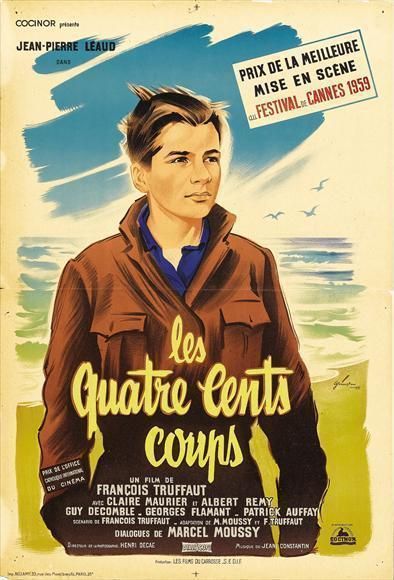
Claudine Bouché: 1) Working with François Truffaut, who writes the script as well as directs the picture. In such a case, the “montage” after shooting is not only cutting but sometimes rewriting the story, changing the continuity of the sequences, giving importance to a character, etc. 2) I had a chance to see Hitchcock’s pictures, again and again, on a Moviola.
Renée Claude Lichtig: I had the opportunity to view (and thus to study) thousands of films at the Cinémathèque Française under the direction of Henri Langlois.
Verna Fields: The most important influences on me have come from people and their work—writers, directors, art directors, costume designers. Director Irving Lerner had a great influence on me. I worked under him on El Cid. He recommended me to Bogdanovich for Targets.
What do you consider to have been the most important changes that have occurred in film editing since 1960?
Claudine Bouché: 1) More freedom in cutting the picture itself. 2) The place and prominence of the music. Old films had music from beginning to end, which made the music look more like a sound effect. Less music nowadays, more efficient. Less sound effects, too, but important ones. No more process shots.
Agnès Guillemot: The great change brought about by the New Wave in France (though Gréemillon and Vigo had already prepared it) is the construction of films more according to a rhythm than according to realism of the anecdotal narrative.
Renée Claude Lichtig: The greatest transformation in the editing of the films of the Sixties was brought about by Jean-Luc Godard. He found a new continuity in the manner of telling a story in time by utilizing ellipses in the editing of the images. These changes took place after the first films of Godard. He influenced the filmmakers of the whole world.
Verna Fields: The butt splicer. Irving Lerner has said, “The butt splicer freed the editor.” Its use allows you to try something, and if it doesn’t work, to go back and make even the most minute change. Or just to try different possibilities for cuts.
Evelyn Spice Cherry, ca. 1940
ABOUT “EDITED BY”
About “Edited by”
I’ve been making films since 1978, so I know how critical editing is.
I’ve also known that women editors have played a significant role in the evolution of cinema, without knowing many details or having seen many photos like this one.
In January 2018, I came across a chapter about editing in a film history book in which every reference to a film mentioned the director’s name, not the editor’s. I looked up each film on IMDb and discovered an astonishing number of women editors, and set about doing the research which has resulted in this website. It isn’t meant be comprehensive or exhaustive, but rather to be the beginning of a survey that others will continue to expand upon.
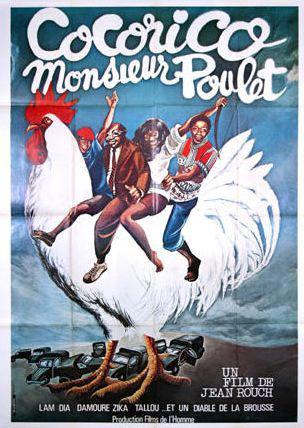
The first part of the website presents the “main editors”—women who were, or are, editors by profession. There are ninety-two women represented with full pages, as well as eighteen more who have smaller mentions (in relation to their work on films directed by Jean Rouch, or those starring Danièle Delorme).
The second part of the website presents the ninety-six “Filmmakers Who (always or sometimes) Edit.”
The main editors are organized by date of birth. If someone’s birth date wasn’t in the public record, I made an estimation based on when she started working and grouped her within that decade.
On each editor’s page, you’ll find one or more photographs and the key facts about her work history, but no external links. However, the main Appendix has multiple links for each woman. These are either video interviews, articles that discuss the style in which she worked, or sometimes a text by the editor.
There are also several movie posters on each woman’s page, which serve as a visual reference to some of the films she edited. And at the back of the website is the Poster Gallery, where you can see all of them arrayed together.
While researching the main editors, I happened upon some interesting facts or ideas that went beyond the specific biography of an editor. Those became the “CUT TO” pages, which are interspersed throughout the site.
The question of “getting credit where credit is due” was a prime motivation for making the site, so there is a Screen Credits Gallery at the back of the website, as well as some samples of screen credits on a few of the editors’ pages.
For the launch party at Union Docs in Brooklyn, I created Edited by: The Companion Film, which has a one-minute clip from a film edited by each of the ninety-two main editors. There’s a link to it on the Table of Contents page. I’m sorry to say that it doesn’t include the other half of the editors on the site, the “Filmmakers Who (always or sometimes) Edit.” Their work has also been pivotal in developing editing techniques, and I hope that can be a project for a later date.
There are four Appendices.
A: It’s where you’ll find further information about the individual editors.
B: There have been some good articles written about the history of women editors. They often talk about several women, and often include some of the women singled out in our pages, but rather than mix them into the first Appendix, we created Appendix B: The History of Women Editors, with links to those articles.
C: With the exception of the information on the “CUT TO” pages and the brief quotations from the editors on their individual pages, the site doesn’t analyze or discuss specific editing techniques, or the complex working relationship between directors and editors, or explain how editing plays such major role in the creation of a film. I assume that some of you are fairly knowledgeable about editing, but that others might want to start learning more. To that end, we created Appendix C: Editing 101, which has links to online articles and videos that explain many of the fundamental concepts, concerns, and technical aspects of editing.
D: Everyone has their favorites, and it was utterly impossible to include everyone on the site, so we created Appendix D: The Collaborative Update, where names of editors will be added whenever we hear from a visitor about them.
I am grateful to Bes Arnaout, Lydia Cornett, Lili Dekker, Michael Jorgensen, Charlotte Maher Levy and Jane Pritchard for doing much of the end-stage research on the Appendices. They dug deep to find substantial, thorough information whenever possible in order to create a more focused way to learn about someone, rather than through a random google search.
There is also an index so that you can easily find any of the editors.
And finally, if you want to know who worked for a certain director or who edited a specific film, the search field lets you write in the name of a director–for example, Jean-Luc Godard–so that you can discover that nineteen of his films were edited either by Agnès Guillemot, Cécile Decugis, or Françoise Collin. (Amazing, eh?) Or you can write in a film title–like Breathless–and find out which one of those women shaped that masterpiece.
–Su Friedrich
TABLE OF CONTENTS
Table of Contents
This was designed more like a book, without distracting sidebars and diversionary links on the pages, so here’s how to get around and what you’ll find when you get there:
And you can always use the search tool if you want to connect a director or a film with an editor.
For example: Who edited The Wizard of Oz?
Or: Who edited twenty films for Werner Herzog?






 As a documentary film editor, Enat Sidi is a frequent collaborator with directors Heidi Ewing and Rachel Grady, editing most of their feature films including The Boys of Baraka (an Emmy nominee), Jesus Camp (an Oscar nominee), 12th & Delaware (a Peabody winner), and DETROPIA (Sundance Best Editing award). Sidi has also edited for Ellen Kuras and Jennifer Vendiiti, and she edited The Wolfpack, the 2015 Grand Jury Winner at Sundance.




 “When I start cutting a movie, I always cut with ambivalence. I have a definite intention, a definite starting point: the dramatic function of the scene; the psychology of the characters, etc. But when I become absorbed in the material, I suddenly see all the possibilities the material contains. The unexpected. Intended and unintended possibilities. I can’t help wandering into the material. I milk the material for all the small possibilities I see in it. A look, a smile—after the director has said “cut!”, an unintentional juxtaposition of two images. Afterwards I form a general view again. But it is in the ambivalence, in the collision between the general strategy and the pleasant distractions along the way that constitutes editing as art; the true life of the film.”
 “If you remember that a film is composed of thousands of tiny photographs arranged in a certain order to tell a story, you will realize that to assemble them in the most effective sequence is an exacting and delicate task. I think it has also a claim to be called an artistic one…


