BEVERIDGE, HORTENSE “TEE”

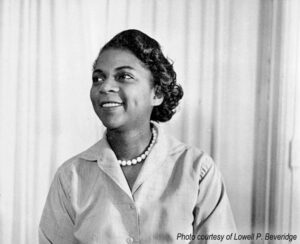
Hortense “Tee” Beveridge

1923-1993

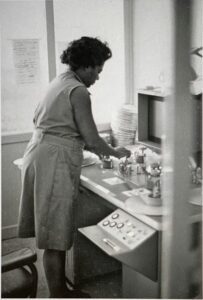
In 1947, Hortense “Tee” Beveridge was admitted to Hunter College. She majored in social work and became a mentee of the CNA (Committee for the Negro in the ARTS) which was the beginning of her film education. She then attended two semesters of night school film classes at New York University and made the acquaintance of fellow female film editor Peggy Lawson (with whom she would go on to collaborate over many years).
Beveridge’s political activism in the late 1940s led her to join the Council on African Affairs (CAA)—an outgrowth of the International Committee on African Affairs, cofounded in 1937 by Max Yergan and Paul Robeson—where she merged her political activities with her nascent filmmaking skills. The CAA provided Beveridge with the opportunity to edit her first known complete film, South Africa Uncensored (1951), a twenty-two-minute polemic against apartheid that was distributed by the Council.
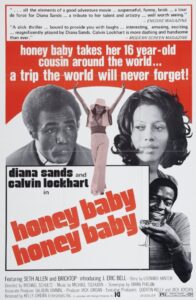
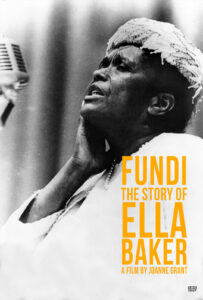
She was first black woman admitted to Local 771, the union for motion picture film editors, during the mid-1950s. During the next thirty years, Beveridge worked in three areas of film production (sometimes being credited with her maiden name, Hortense Sie). She cut featurette “making-of” documentaries about commercial films like Bullitt (1968), Mean Streets (1973), and The Outlaw Josey Wales (1976); she edited feature narrative films, including Honeybaby, Honeybaby (1974) by Michael Schultz; and edited documentaries like Amiri Baraka’s The New-Ark (1968), Joanne Grant’s Fundi: The Story of Ella Baker (1981), about the great civil rights activist, and Bittersweet Survival: Southeast Asian Refugees in America (1982) by Christine Choy and J. T. Takagi.
Beveridge also mentored St. Clair Bourne, Kathleen Collins, and John Killens at various early stages of their careers.  –  Thanks to Mike Jones and Walter Forsberg for their research.

Editing “Honeybaby, Honeybaby” in Beirut (circa 1974). Courtesy of Lowell P. Beveridge

As Walter Hess recalls: “I was part of that leftist group. MPO Television Films employed a great number of what you would call leftists, as did several other companies that did similar work. Hortense and I were companions, working next to each other in the cutting room. There was only one other African American editor that I can think of at that time. They were incredibly rare. Tee had a very fine reputation as an editor, especially among that group of leftists. As far as I was concerned, Tee was very reserved. She was not ‘Hail fellow, well met.’ She was her own person, and I think the fact that she was black and a woman made her careful about what she might say or do.”

Please note: There are links to several of her films in the Appendix, courtesy of Ina Archer and the archive at the Smithsonian’s National Museum of African American History & Culture.

HACHE, JOËLLE

Joëlle Hache

Born 1950

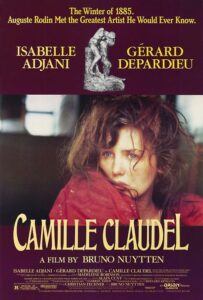
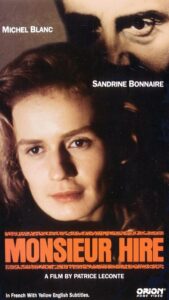
During her fifty-year career, Joëlle Hache has amassed editing credits for sixty-six films. She began working in 1978 as an assistant to editor Noëlle Boisson on the first two Les Bronzés films directed by Patrice Leconte. In 1983 she became Leconte’s primary editor and worked with him on eighteen films, beginning with Circulez y a rien à voir!. She also influenced the music choices for some of his films, such as Le Parfum d’Yvonne, Monsieur Hire, and Une Promesse. Leconte has said that he considers her “his right-hand woman.” Hache is also known for working with other directors on such films as Camille Claudel (Bruno Nuytten), L’homme fidèle (Louis Garrel), La Melodie (Rachid Hami), Un Jour Fille (Jean-Claude Monod) and in 2025—at the age of 75—she edited Belladone, directed by Alante Kavaite.
Hache has received five nominations for a César award for Best Editing, and in 2016 she became an officer in the Order of Arts and Letters, managed by the French Ministry of Culture, which rewards “people who have distinguished themselves by their creation in the artistic or literary field or by the contribution they have made to the influence of arts and letters in France and in the world.”
About Monsieur Hire, Max Foyzey wrote that “The editing choices by Leconte and editor Joëlle Hache are spectacular, taking us directly to the middle of happenstances, effectively creating an immediacy that moves the the story along in a brisk eighty minutes.”    

Appendix D: The Collaborative Update

Appendix D: The Collaborative Update

During the year I was researching, people kept giving me names. Now that the site is launched, more people are sending me names because there’s no end to the remarkable women who have been, or are, editors.
I can’t create new pages (sorry!), but in the spirit of collaboration with all of you who care so much about this subject, I will be adding names as I get them.
If I receive a good source of information about the editor, the name will be linked to that source and I’ll add a note about one or two titles of films they edited, or a director with whom they worked a lot.
(Hint, hint…if you write me about someone, maybe please also give me that info? Thanks!)
And in keeping with the format of the website site, I’ll also identify some of them with the title from this category, if they’re also a filmmaker: “A filmmaker who (always or sometimes) edits”


Mercedes Alonso – She lived to be 100, and edited most of the films featuring Spanish pop groups.
Also see this article by Joan Miramon.


Anne Alvergue – Documentary editor of films such as That Way Madness Lies…, Africa Rising and Love, Gilda


Shira Arad  – Member of the Israeli Academy of Motion Pictures and the Israeli Editors Guild. Known for such films as Our Father, Antenna and Incitement.


Germaine Artus – Edited for Robert Bresson (The Devil, Probably and Lancelot of the Lake) among others. In later years, her editing credit appeared instead as Germaine Lamy.


Franki Ashiruka – Kenyan editor; runs editing company AFRICA POST OFFICE(APO LTD)


Claire Atherton – Editor of Chantal Akerman‘s films for the last 20 years (A Couch in New York, The Captive, Down There, No Home Movie). Recipient of a special lifetime achievement award for her editing at the Locarno Film Festival.


Nancy Baker – Producer, writer, editor; Born Into Brothels and Harlan County, U.S.A.


Marguerite Beaugé – Fifty editing credits including Pépé le Moko, She Returned at Dawn, Lumières de Paris and Carl Dreyer’s The Passion of Joan of Arc.


Debbie Berman – Spider-Man: Homecoming; Captain Marvel; co-editor (with Michael P. Shawver) of Black Panther


Ann Sophie Bion  – The Artist


Yael Bitton – Both an editor and a filmmaker


Myriam Borsoutsky – French editor of such films as Bullfight, The Man Who Returns from Afar and Let’s Make a Dream


Elfride (as Elfi) Böttrich – Began editing in 1919. Two films by F. W. Murnau (Faust and The Last Laugh) and Passion by Ernst Lubitsch. In later years, edited 41 episodes of an East German TV series, Vorsicht, Falle! – Nepper, Schlepper, Bauernfänger, ending in 1985.


Victoria Boydell – Belle, The Second Best Exotic Marigold Hotel, Goodbye Christopher Robin, Luther


Anita Brandt Burgoyne, ACE – Legally Blonde


Lisa Bromwell, ACE—House of Cards and The Sessions


Marie Castro (Vasquez) – Mr. Klein, Toute Pour Plair


Betty Ciccarelli – Documentary film editor, Eyes on the Prize and The American Experience


Margaret Clancey – An actress and also an editor who cut thirty films at Fox and United Artists from 1927 to 1938.


Monica Collingwood was one of the original charter members of the Editors Guild in 1937, and in 1947 was nominated for a Best Editing Oscar for The Bishop’s Wife.


Annie Collins – Documentary film editor; cut Keskidee Aroha,  Keskidee Aroha and Te Whakarauora Tangata for Merata Mita. Video interview with Collins is here


Cari Coughlin – Editor of fiction and documentary films such as Daisy Winters and Powder and Gold, and numerous TV series 


Mona Davis – Documentary editor of films such as Running from Crazy, The Farm: Angola, USA and five episodes of Making a Murderer


Saela Davis – Editor of Americana, The Fits, and Hala. Currently co-directing a feature with Anna Rose Helmer, director of The Fits.


Virginie Danglades – Documentary editor of films such as The Barber of Little Rock, The Principles of Pleasure, Unladylike, and UNLADYLIKE: The Change Makers.


Keiko Deguchi – Editor of the documentary The Cats of Mirikatani and dramatic features like We The Animals and Luminous Motion


Kathy Dougherty – An editor (Perfectly Normal for Me, 2 episodes of Real Sex), a director/editor (Recording ‘The Producers’: A Musical Romp with Mel Brooks; The Beatles: The First U.S. Visit) and a producer (A Vermont Farmer).


Marie-Sophie Dubus – F for Fake by Orson Welles, Cercle Rouge by Jean-Pierre Melville


Penelope Falk –  Documentary editor of many films including Joan Rivers: A Piece of Work and Bombshell: The Hedy Lamarr Story


Forough Farrokhzad – Iranian poet and filmmaker, The House is Black


Sarah Flack, ACE – Has edited several films for Sophia Coppola and Steven Soderbergh, among others


Teresa Font – Spanish editor of many films for Vicente Aranda and Imanol Uribe. Recently edited Almodovar’s Pain and Glory. An open source online book of interviews with her (in Spanish) can be found here.


Amy Foote – Documentary editor of films such as The Work, Mavis! and Watergate: How We Learned to Stop an Out-of-Control President


Marjorie Fowler – Elmer Gantry, Mr. Hobbs Takes a Vacation. She got an Oscar nomination in 1968 for Doctor Doolittle. The American Cinema Editors awarded her its Lifetime Career Achievement Award in 2000 and had nominated her six times for an Eddie Award.


Helga Gentz – Worked more than forty years at the East German Film Studios (DEFA); known for Jahrgang 45, Jadup & Boel, and Die Frau und der Fremde


Ofelia Gevorkiani – Georgian film editor of Madgana’s Donkey, winner of the Palm d’Or for Short Fiction in 1956, among many other films


Samira Ghahremani – Austrian editor known for Good Life Deal, winner of the 2023 Max Ophüls Award, Matter Out of Place, and Voltage.


Dana E. Glauberman, ACE – Up In the Air and Juno


Stacy Goldate — A filmmaker and editor whose work includes Disclosure, Hillbilly and Inhospitable.


Anne Goursaud – Francis Ford Coppola, Bram Stoker’s Dracula, One From the Heart


Tracy Granger, ACE – Still Life, Boys Don’t Cry and Gas, Food, Lodging


Madeleine Gug – Les Diaboliques and The Wages of Fear by Henri-Georges Clouzot; Lola Montes by Max Ophüls


Catherine Haight, ACE – Puzzle, Transparent, I Love Dick


Colleen Halsey – Edward Scissorhands


Linda Hattendorf – Director and editor of The Cats of Mirikitani, and editor of numerous other documentaries.


Barbara Hennings – The Nasty Girl


Katherine Hilliker – She had a multi-faceted career in many aspects of film production, including editing, during the early years of cinema.


Tina Hirsch, ACE – The West Wing; a former (and the first woman) president of ACE


Sabine Hoffman, ACE – Maggie’s Plan, Elvis & Nixon


Ágnes Hranitzky—edited numerous Béla Tarr films including Satantango and was co-director with Tarr of Werckmeister Harmonies, The Man from London and The Turin Horse. Also edited Anna by Márta Mészáros, and other films


Claude Ibéria –  Jean Cocteau’s Beauty and the Beast and The Eagle with Two Heads


Edie Ichioka (aka Edie Bleiman), ACE – The Boxtrolls, Toy Story 2


Barbara Jarvis – Winter Soldier


Emmanuelle Jay – French editor (La belle occasion, Road to Istanbul) and author of a book about editing (Plus long le chat dans le brume) who also writes a blog about editing (Journal d’une monteuse.)


Virginia Katz, ACE – Edited several films for Bill Condon, among many others


Céline Kélépikis – The Red Turtle, Now or Never


Susan E. Kim – film and television editor on projects that include Pachinko and Two Yellow Lines.


Clare Knight (née de Chenu)- editor of animated feature films including Madagascar (as Clare de Chenu) and the three King Fu Panda movies and The Lego Movie 2 (as Clare Knight)


Wic Kjellin–Long term editor for Vilgot Sjöman on films such as I Am Curious (Yellow), A Handful of Love and Garaget. Also edited for numerous other Swedish directors.


Elizabeth Kling – Household Saints, Georgia, O.C. & Stiggs, and a lot of recent TV series.


Yeva Ladyzhenskaya – Russian editor with seventeen credits on IMDb. Edited Tanya for Grigoriy Aleksandrov. Cut seven films for Mikhail for Romm including Nine Days of One Year, Mechta and Girl No. 217. (N.b.: Her credit appears as Y., Ye., E. or Yeva)


Julie ‘Bob’ Lombardi – Super Size Me and Morgan Spurlock Presents: Freedom, the Movie!; many episodes of TV series.


Jane Loring — Edited trailers before becoming a film cutter for Paramount-Famous Players Lasky in 1927. She remained with Paramount until the early 1930s, when she moved to RKO as an assistant director.


Alex Mackie, ACE  – Editor on many TV series, including The Crown, Wallander, Downton Abbey, and on films such as Mary Shelley


Kelly Matsumoto, ACE – Nominated twice by the Academy of Science Fiction, Fantasy & Horror Films for her work on the Fast and the Furious franchise


Jabeen Merchant – Manorama Six Feet Under, Laal Kaptaan  


Renata Merck – German editor of fiction and documentary films including Shattered Glass, The Holy Bunch and Seduction: The Cruel Woman


Merata Mita – Māori documentary director/editor.


Jelena Modric – Croatian editor of films such as Brija  Hebrang and No One’s: Niciji


Cindy Mollo, ACE—Ozark, House of Cards, Mad Men


Julie Monroe – Assistant, associate, and primary editor for numerous Oliver Stone films


Debra Neil-Fisher, ACE – Fifty Shades of Grey, Transformers: The Last Knight, Austin Powers: International Man of Mystery, Austin Powers: The Spy Who Shagged Me, The Hangover (I, II and III)


Petra de Nieva – Active from 1941-1978, she has credits on IMDb for 76 feature films.
Also see this article by Joan Miramon.


Nancy Novack — Spike Lee’s When the Levees Broke: A Requiem in Four Acts


Ruth Novaczek –  Editor and director/writer of Tea Leaf, 50-50, Cheap Philosophy, and Radio (5 films).


Margarita de Ochoa – Edited fifty films during her career including Calle Mayor (1956).
Also see this article by Joan Miramon.


Carole Gikandi Omondi – Film Editor/Director – Medeva – Media Development in Africa


Sara Ontañón – Began editing in 1937, has over 50 films to her credit, and was probably the first woman to work as a head film editor in Spanish cinema.
Also see this article by Joan Miramon.


Anne Østerud – Danish editor known for her work on Another Round (2020), The Hunt (2012) and The Girl with the Dragon Tattoo (2009)


Edna Ruth Paul – Sam Rami’s The Evil Dead, five episodes of ABC Afterschool Specials starring Jodi Foster, and Lenny Bruce’s Dirtymouth. (Unfortunately, the many documentaries Paul edited are not listed on IMDb.)


Maria Papoutsis – Ride Like a Girl, Penguin Bloom


Marfa Ponomarenko – Ukrainian editor of some of the most important Soviet surrealist films of the 1960s, including The Color of Pomegranates and Shadows of Forgotten Ancestors by Sergei Parajanov.


Ziva Postec – The editor of Shoah, among numerous other films.
There’s a feature film about her: Ziva Postek: The Woman Who Edited Shoah, by Catherine Hébert (2018).


Pat Powell – Editor of Joe and Maxi and Year of the Woman


Pamela Power – The Hunger, The Man Who Knew Too Little


Magdalena Pulido – Active from 1937-1978, she worked on more than 50 films, TV episodes, and TV movies over the course of her career.
Also see this article by Joan Miramon.


Nelly Quettier – Edited numerous films for Leo Carax (Holy Motors) and Claire Denis (Beau Travail)


Fabienne Rawley, ACE – Zootopia, Monster House


Tricia Reidy, ACE – Editor of many films & series episodes for Ken Burns & Lynn Novick (The Civil War; Baseball; The War; The Roosevelts; Jazz; Vietnam)


Tatiana S. Riegel, ACE – I, Tonya


Charlene Rule – (USA/Canada) Documentary and experimental film editor. Documentaries include: Same Sex America, MIXED, Frames, Wild Blue Yonder and Levi: Becoming Himself


Mónica Salazar – Mexican editor of short and long films including Honeyboy by Alma Har’el


Catherine Schwartz – French editor of Call My Agent!, Bigger is Beautiful and Tel Aviv on Fire


Toby Shimin – Documentary editor of films such as Buck, How to Dance in Ohio and 32 Pills


Trudy Ship – Edited numerous films for Stephen Herek, including 101 Dalmatians, as well as for other directors


Claire Simon – Director, actor and editor on films such as God’s Offices and At All Costs


Rose Smith – Early cinema editor. Worked on Birth of a Nation, Intolerance and Way Down East.


Joan Sobel, ACE – Has edited films for Tom Ford, among many others


Alexandra Strauss – I Am Not Your Negro, A Pigeon Sat on a Branch Reflecting on Existence


Mary Sweeney – Producer, director, writer, and editor; did numerous films with David Lynch


Radojka Tanhofer – Croatian editor of films including It Was Not in Vain, Double Circle and Povratak


Selda Taşkın – Yuva


Camilla Toniolo – Mildred Pierce (two episodes), Buffy the Vampire Slayer, Living in Oblivion


Norma Torrado – Editor at the Cuban film institute (ICAIC) as editor of newsreels; Hour of the Furnaces; many documentary films for Santiago Alvarez


Susan Utell – editor of documentaries like Paying the Price for Peace, Trapped and For the Love of Conch


Lindsay Utz – American Factory, Quest


Irina Varina – Director and editor of films and web series such as Us, Forever Ago and Things I’d like to do instead of thinking about men


Janine Vereau – One of the co-editors of Cleo from 5 to 7 and six other films by Agnes Varda, including Le Bonheur. Also edited films for Raul Ruiz, Manoel de Oliveira and Benoit Jacquot.


Lesley Walker – The Dresser, Mama Mia!, Emma, Mona Lisa 


Eda Warren – I Married a Witch, St. Louis Blues, The Twilight Zone


Julia Wong, ACE – Edited films for Brett Ratner and Catherine Hardwicke, among others
POSTER GALLERY


BAKER, HETTIE GRAY

Hettie Gray Baker

1880 – 1957

Hettie Gray Baker started by writing movie scenarios and earned twenty-four writing credits during a ten-year period before becoming a film editor.
From 1900-1903 she was employed at the Hartford Public Library, where she began writing movie scenarios during her spare moments. She sold her first story, Treasure Trove, to Vitagraph Studios in 1912. In 1913, she was employed by Hobart Bosworth’s film company as a story editor. She also scripted stories for a series of silent films based on the work of Jack London. Among these were The Valley of the Moon and The Chechako.
Baker was one of the co-founders of the Photoplay Authors League – a precursor of the Screen Writers Guild – and in its first year was elected vice-president.
In 1916, she went to work for Fox Film Corporation (i.e. Twentieth Century Fox) as a film editor. In her first year, she edited A Daughter of the Gods, Hollywood’s first film with a million-dollar budget. Listed as H.G. Baker, she may have been the first female editor to be acknowledged in a film’s credits.
Baker was a writer and editor for over twenty-eight films, including John Ford’s The Iron Horse, but was rarely credited. By 1938, she was a movie executive, serving as censor representative for Twentieth Century Fox. Baker later became known for her knowledge of Siamese cats and wrote several cat books, including Cat Tales, published by Farrar Strauss and Young.

“I sometimes think I was too dull to think of giving up. It just never did occur to me.”
—“Movie Pioneer” in the Sunday Morning Star. The full article can be found in the Appendix.

LET’S GO TO THE EDITING ROOM…

Let’s Go To the Editing Room…
Irene Morra, born in 1893, first worked as a negative cutter at D. W. Griffith’s studio. She then worked for Pathe from 1927 to 1928, at First National from 1921-23, at MGM/Jackie Coogan Productions in 1924, for the Fox Film Corporation from 1928-38 and at Warner Brothers from 1943-54. By the time she retired, in 1958, Morra had earned seventy-six editing credits.

INTENTIONS, ARTISTRY, THREE QUESTIONS

Intentions, Invisible Artistry,
and Three Big Questions

“When I start cutting a movie, I always cut with ambivalence. I have a definite intention, a definite starting point: the dramatic function of the scene; the psychology of the characters, etc. But when I become absorbed in the material, I suddenly see all the possibilities the material contains. The unexpected. Intended and unintended possibilities. I can’t help wandering into the material. I milk the material for all the small possibilities I see in it. A look, a smile—after the director has said “cut!”, an unintentional juxtaposition of two images. Afterwards I form a general view again. But it is in the ambivalence, in the collision between the general strategy and the pleasant distractions along the way that constitutes editing as art; the true life of the film.”
—Dede Allen


“If you remember that a film is composed of thousands of tiny photographs arranged in a certain order to tell a story, you will realize that to assemble them in the most effective sequence is an exacting and delicate task. I think it has also a claim to be called an artistic one…

I believe that, like writing, good cutting cannot be analyzed. It is intangible, like all branches of showmanship or artistry. Instinctively you know whether or not a scene is coming out right. If it is not, there is no way to patch up. There is nothing to do then but start again from the beginning…

The good cutter takes a pride in his work far beyond the glory of having his name among the titles of the finished film. It is not a business for the man or woman who seeks wide public recognition of work done. Cutting at its best produces a film flowing so smoothly that the audience thinks only of the entertainment and gives no thought to the mechanics that went to create it. A perfect film ought to give the illusion that it was all done exactly as seen on the screen, and that there never was any such person as a cutter.”
—Three extracts from “The Cutter” by Margaret Booth in “Behind the Screen: How Films Are Made” ed. by Stephen Watts, 1938. The full interview can be found in the Appendix.

THE THREE BIG QUESTIONS: 

The following text appeared in the March-April 1977 issue of the film journal Film Comment. It was reprinted on the Motion Picture Editors Guild website in May 2007 to help them celebrate their 70th anniversary. (The issue also included a list of the top 75 editors of 1977, including Claudine Bouché.)
The questions below were posed to both female and male editors, but I’ve singled out the responses from the women. The male editors were James Clark, Antony Gibbs, Reginald Mills, Henri Colpi, William Reynolds, Ralph Rosenblum, Tom Priestly, John Victor-Smith, Ernest Walter, and Bernard Gribble.

What is film editing? Good film editing? Great film editing?

Claudine Bouché: Film editing is putting rushes harmoniously together in order to tell a story. Good film editing is giving to the rushes a special atmosphere, being true to the script, trying to hide shooting weaknesses or script weaknesses, if any. Great film editing must not show on the screen but is a heartbeat.

Agnès Guillemot: a) Rhythm and music. Organization of a form resembling an orchestra. b) Good film editing is when the film breathes well. c) Great film editing is when the entire being is happy.

Verna Fields: The answer to all three: whatever makes the picture work. Sound cutters make the best editors [sound more than music editors] because they have a feeling for rhythm and pace necessary to make something work. They can make things work by manipulating within the picture without changing the picture.

Barbara McLean: Film editing is telling the story with film. Good film editing is selecting the best of the film. Great film editing occurs when you begin with great pictures.

Margaret Booth: Rhythm counts so much; the pauses count so much. Everything must be rhythmic. It’s the same as when people speak or dance; you can tell right away when it’s wrong. Everything has to be rhythmic.

Is there such a thing as an editing “style,” making it possible to identify the work of a particular editor?

Agnès Guillemot: It is possible to recognize the “footprint” of an editor as it is that of an orchestra conductor of a musical work. But the editor must embrace the personal rhythm of each director and not impose her own.

Do you yourself have a discernible style as an editor? What are its characteristics?

Angès Guillemot: My ambitions as to style are: rigorousness, precision, humility, simplicity.

Verna Fields: I don’t cut comedy any differently than drama. You have to reach for emotion and that is done the same way, regardless of the emotion.

What has been the most important influence on the development of your craft as an editor?

Claudine Bouché: 1) Working with François Truffaut, who writes the script as well as directs the picture. In such a case, the “montage” after shooting is not only cutting but sometimes rewriting the story, changing the continuity of the sequences, giving importance to a character, etc. 2) I had a chance to see Hitchcock’s pictures, again and again, on a Moviola.

Renée Claude Lichtig: I had the opportunity to view (and thus to study) thousands of films at the Cinémathèque Française under the direction of Henri Langlois.

Verna Fields: The most important influences on me have come from people and their work—writers, directors, art directors, costume designers. Director Irving Lerner had a great influence on me. I worked under him on El Cid. He recommended me to Bogdanovich for Targets.

What do you consider to have been the most important changes that have occurred in film editing since 1960?

Claudine Bouché: 1) More freedom in cutting the picture itself. 2) The place and prominence of the music. Old films had music from beginning to end, which made the music look more like a sound effect. Less music nowadays, more efficient. Less sound effects, too, but important ones. No more process shots.

Agnès Guillemot: The great change brought about by the New Wave in France (though Gréemillon and Vigo had already prepared it) is the construction of films more according to a rhythm than according to realism of the anecdotal narrative.

Renée Claude Lichtig: The greatest transformation in the editing of the films of the Sixties was brought about by Jean-Luc Godard. He found a new continuity in the manner of telling a story in time by utilizing ellipses in the editing of the images. These changes took place after the first films of Godard. He influenced the filmmakers of the whole world.

Verna Fields: The butt splicer. Irving Lerner has said, “The butt splicer freed the editor.” Its use allows you to try something, and if it doesn’t work, to go back and make even the most minute change. Or just to try different possibilities for cuts.

Evelyn Spice Cherry, ca. 1940

ABOUT “EDITED BY”

About “Edited by”

I’ve been making films since 1978, so I know how critical editing is.
I’ve also known that women editors have played a significant role in the evolution of cinema, without knowing many details or having seen many photos like this one.

In January 2018, I came across a chapter about editing in a film history book in which every reference to a film mentioned the director’s name, not the editor’s. I looked up each film on IMDb and discovered an astonishing number of women editors, and set about doing the research which has resulted in this website. It isn’t meant be comprehensive or exhaustive, but rather to be the beginning of a survey that others will continue to expand upon.

The first part of the website presents the “main editors”—women who were, or are, editors by profession. There are ninety-two women represented with full pages, as well as eighteen more who have smaller mentions (in relation to their work on films directed by Jean Rouch, or those starring Danièle Delorme).

The second part of the website presents the ninety-six “Filmmakers Who (always or sometimes) Edit.”

The main editors are organized by date of birth. If someone’s birth date wasn’t in the public record, I made an estimation based on when she started working and grouped her within that decade.
On each editor’s page, you’ll find one or more photographs and the key facts about her work history, but no external links. However, the main Appendix has multiple links for each woman. These are either video interviews, articles that discuss the style in which she worked, or sometimes a text by the editor.
There are also several movie posters on each woman’s page, which serve as a visual reference to some of the films she edited. And at the back of the website is the Poster Gallery, where you can see all of them arrayed together.

While researching the main editors, I happened upon some interesting facts or ideas that went beyond the specific biography of an editor. Those became the “CUT TO” pages, which are interspersed throughout the site.

The question of “getting credit where credit is due” was a prime motivation for making the site, so there is a Screen Credits Gallery at the back of the website, as well as some samples of screen credits on a few of the editors’ pages.

For the launch party at Union Docs in Brooklyn, I created Edited by: The Companion Film, which has a one-minute clip from a film edited by each of the ninety-two main editors. There’s a link to it on the Table of Contents page. I’m sorry to say that it doesn’t include the other half of the editors on the site, the “Filmmakers Who (always or sometimes) Edit.” Their work has also been pivotal in developing editing techniques, and I hope that can be a project for a later date.

There are four Appendices.
A:  It’s where you’ll find further information about the individual editors.
B:  There have been some good articles written about the history of women editors. They often talk about several women, and often include some of the women singled out in our pages, but rather than mix them into the first Appendix, we created Appendix B: The History of Women Editors, with links to those articles.
C:  With the exception of the information on the “CUT TO” pages and the brief quotations from the editors on their individual pages, the site doesn’t analyze or discuss specific editing techniques, or the complex working relationship between directors and editors, or explain how editing plays such major role in the creation of a film. I assume that some of you are fairly knowledgeable about editing, but that others might want to start learning more. To that end, we created Appendix C: Editing 101, which has links to online articles and videos that explain many of the fundamental concepts, concerns, and technical aspects of editing.
D:  Everyone has their favorites, and it was utterly impossible to include everyone on the site, so we created Appendix D: The Collaborative Update, where names of editors will be added whenever we hear from a visitor about them.
I am grateful to Bes Arnaout, Lydia Cornett, Lili Dekker, Michael Jorgensen, Charlotte Maher Levy and Jane Pritchard for doing much of the end-stage research on the Appendices. They dug deep to find substantial, thorough information whenever possible in order to create a more focused way to learn about someone, rather than through a random google search.

There is also an index so that you can easily find any of the editors.

And finally, if you want to know who worked for a certain director or who edited a specific film, the search field lets you write in the name of a director–for example, Jean-Luc Godard–so that you can discover that nineteen of his films were edited either by Agnès Guillemot, Cécile Decugis, or Françoise Collin. (Amazing, eh?) Or you can write in a film title–like Breathless–and find out which one of those women shaped that masterpiece.

–Su Friedrich

TABLE OF CONTENTS

Table of Contents

This was designed more like a book, without distracting sidebars and diversionary links on the pages, so here’s how to get around and what you’ll find when you get there:

A Brief Backstory

About “Edited by”

Intentions, Invisible Artistry, and Three Big Questions

The Ingredients for Alphabet Soup (ACE? BAFTA? FCCA?)

The Editors

Filmmakers Who (always or sometimes) Edit

The Film Poster Gallery

The Screen Credit Gallery

“Edited By”–the companion film

Index of Editors

Appendix A: The Editors

Appendix B: History 101

Appendix C: Editing 101

Appendix D: The Collaborative Update

Contact Page

Credits, Thanks and interviews about this website

A female editor cracks the case!

And you can always use the search tool if you want to connect a director or a film with an editor.
For example: Who edited The Wizard of Oz?
Or: Who edited twenty films for Werner Herzog?

INDEX OF EDITORS

Index of Editors